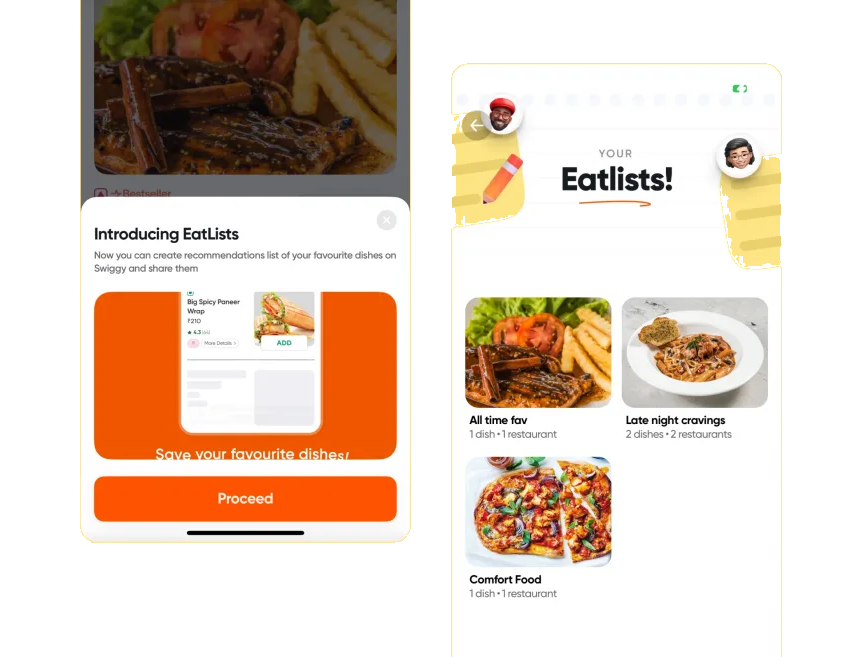


AheadEXAMPLE 01


Show that answers contribute to personalisation
Ahead acknowledges that it is learning from a user’s answers. The example illustrates how perceived attention to input can influence the care someone gives it.
Being observed can change behaviour.
01 / UNDERSTAND
People may behave differently when they know they are part of a study. The term covers a complicated and debated set of explanations rather than one predictable effect. Reduce pressure and compare findings with other evidence.
People may alter behaviour when they know it is being observed or evaluated. A usability participant might read instructions more carefully than usual or describe an intention they will not follow later. Treat observation conditions as part of the evidence. Compare what people say with task behaviour and other relevant signals.
02 / RECOGNISE
Examples of how the principle can appear in an interface.
Ahead acknowledges that it is learning from a user’s answers. The example illustrates how perceived attention to input can influence the care someone gives it.
Hinge shows the age calculated from a birth date and asks for confirmation. Reflecting the result makes the implication of the entered data more visible.
03 / CONNECT
Observation can influence what people do and how carefully they answer. Record the conditions of a study and avoid treating stated enthusiasm as guaranteed future use.
Possible influences to investigate, rather than guaranteed outcomes for every product.
04 / APPLY
Avoid signalling a preferred answer
Use familiar task conditions
Triangulate with other evidence
05 / EXPLORE WITH UPSLIDE
Use a practical guide, read a deeper explanation.

Plan validation with awareness that observation can change how people work.
Choose a research method by the uncertainty you need to resolve and plan what would challenge the hypothesis.
CONNECT THE IDEAS
Keep exploring